As a commercial/industrial service contractor, what is your ratio of repair to recurring service revenue? 1 to 1? 2 to 1? 5 to 1? If you don’t know, you could be missing out on a gold mine of high-margin work. If you do, you probably know that there’s room for improvement. And, when skilled labor is so hard to find, you know that you’ve got to drive as much repair revenue as possible to maximize the revenue potential of each tech.
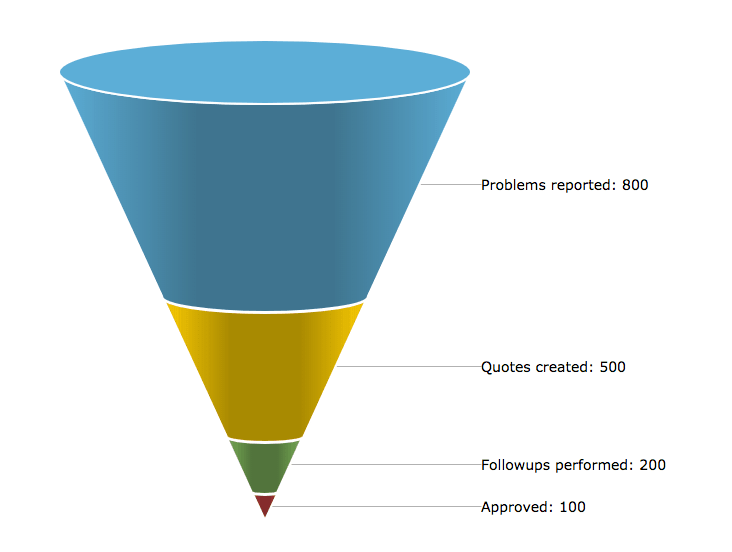
So, what’s holding you back? Funnel friction. In other words, how easy it is to move from the top to the bottom of the repair funnel. Now, before we talk about the friction, let’s define where the funnel begins and ends. Too often, service contractors think that all the magic happens once the deficiency or repair report gets back to the office. As I wrote in another blog post, it actually starts WAY before you ever find a problem to quote. To keep this post simple, we’ll be talking about a funnel that starts with reporting problems in the field and ending with customer approval:
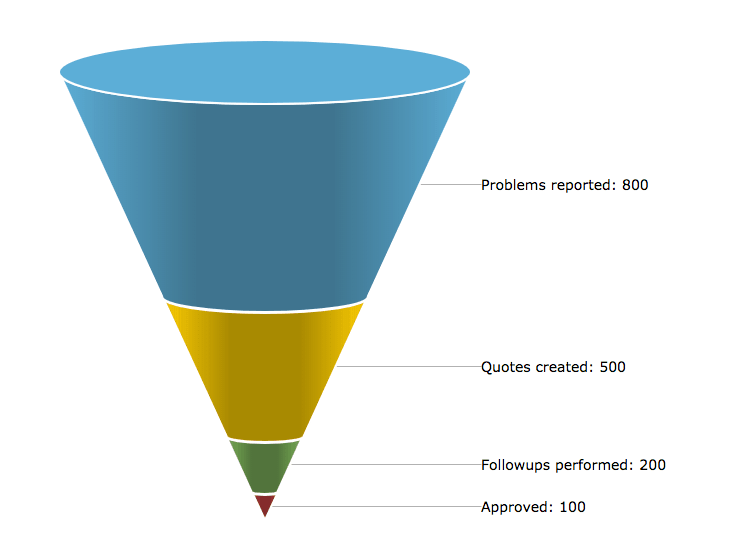
Now, ask yourself: “How much friction is in each task?” Or, simply put:
“How easy is each step?” The easier it is, the more money you’ll make.
Report problems from the field
How easy is it for your techs to send the office all of the information necessary to generate a quote? How is that information communicated? Phone calls, paperwork, and email attachments? Does that data have to be manually entered into your database that manages repair sales?
…Do you have a database to manage repair sales? ServiceTrade does this, and if you’re not using ServiceTrade, a good CRM is your next best bet.
It should be as simple as taking a couple quick pictures, videos, and audio notes that automatically get added to a database for your office staff to start working from. The easier it is, the more reports your techs will create.
Create quotes
How easy is it to take a report from the field and create a quote that’s ready for the customer? Do you have to read chicken-scratch handwriting on reports, call the tech for more details, and retype everything into a Word document?
It should be as simple as clicking a couple buttons to turn a digital report from the field into a quote ready for the customer. The easier it is, the more quotes your company will create.
Follow up on quotes
Does your team manage this whole process out of their email inbox/outbox? Is it obvious which quotes need a follow-up? Is that chain of communication effectively managed and easily shared across the team?
It should be as simple as viewing a list of quotes that are due for a follow-up, no matter which of your team members created and sent the quote. The easier it is, the more follow-ups your company will perform.
Approve quotes
Once your customer receives your quote, how easy it for them to say “yes?” Do they have convenient access to the pictures, videos, and audio notes that will help them make the best decision quickly? After they decide, do they have to print, sign, and fax the quote?
It should be as simple as viewing an interactive quote online with rich media collected in the field that can be approved with the click of a button. The easier it is, the more quotes your customers will approve.
The easier all of these steps are, the more repair revenue you will drive and the more you will get out of each of your techs. Spend an hour assessing your processes. You’ll probably be surprised what you find.
Another blog post you might be interested in: 6 key metrics that that boost repair revenue