









In a tight labor market, many service contractors are at capacity, with no room to take on new customers. To continue growing at such a time, businesses must find ways to increase revenue from existing customers. In fact, ServiceTrade’s recent data analysis found that the fastest way for commercial service contractors to grow overall revenue was to increase revenue per customer—regardless of their capacity.
One of the best ways to grow revenue per customer is to drive more repair revenue by improving pull-through efficiency.
What is pull-through efficiency?
At ServiceTrade, we use the term “pull-through efficiency” to better understand how well contractors are identifying equipment issues during routine work, how often they are quoting these found issues, and at what rate repair quotes are approved and the repair delivered.
The 5 steps to establishing an effective pull-through workflow
Pull-through revenue growth requires a strong and efficient workflow and buy-in from the whole team. Here’s a five-step overview of a strong pull-through workflow.
Step 1: Locate and record all deficiencies.
During service calls and inspections, technicians must look out for repair opportunities—called deficiencies in ServiceTrade—and record them. That last part—recording them—is key. If a tech simply mentions deficiencies to a customer or the office, without documenting them, the rest of the workflow falls apart. Chances that the repair opportunity gets converted into a quote are slim.
Recording deficiencies enables account executives to follow up with quotes and reminders.
Step 2: Evaluate all deficiencies and create the quote.
Once technicians have documented deficiencies, account managers can review them and quote the repairs.
Step 3: Send the quote to the customer.
An engaged customer is more likely to respond to and accept the quote. Contractors should send quotes quickly, while repairs are still on the customer’s mind, and engage them with images and text explanations that clearly explain the deficiency and why it needs repairing.
Step 4: Manage open quotes and follow up with customers.
A ServiceTrade analysis of quote acceptance rates showed that the more quote reminders, the better. Contractors who sent at least six reminders had the best chances of approval.
Step 5: Schedule the repair jobs and earn the revenue
The final step in the workflow is to schedule the repair. Office staff will ideally have a way to easily convert approved quotes into jobs.
How and why to improve pull-through: What the data says
When analyzing invoicing and quoting data from ServiceTrade contractors, we found some interesting trends. The top pull-through performers were not necessarily getting a higher percentage of quotes approved. They were, however, identifying many more repair opportunities during service calls and doing a much better job at following through to convert those opportunities into quotes for their customers. Essentially, they were giving themselves more at-bats.
Let’s take a look at the key findings.
Top and bottom pull-through performers had similar quote acceptance rates.
As shown in the graph below, bottom and top-half performers had similar quote approval rates.

Top performers, however, identified and quoted significantly more equipment issues and/or repair opportunities.
Unlike what we saw with quote approval rate, we found a stark difference in the percentage of work orders with identified equipment issues between top and bottom-half performers. Top performers identified potential repairs on about 25% of all work orders, while bottom-half performers identified issues on only about 10% of work orders.
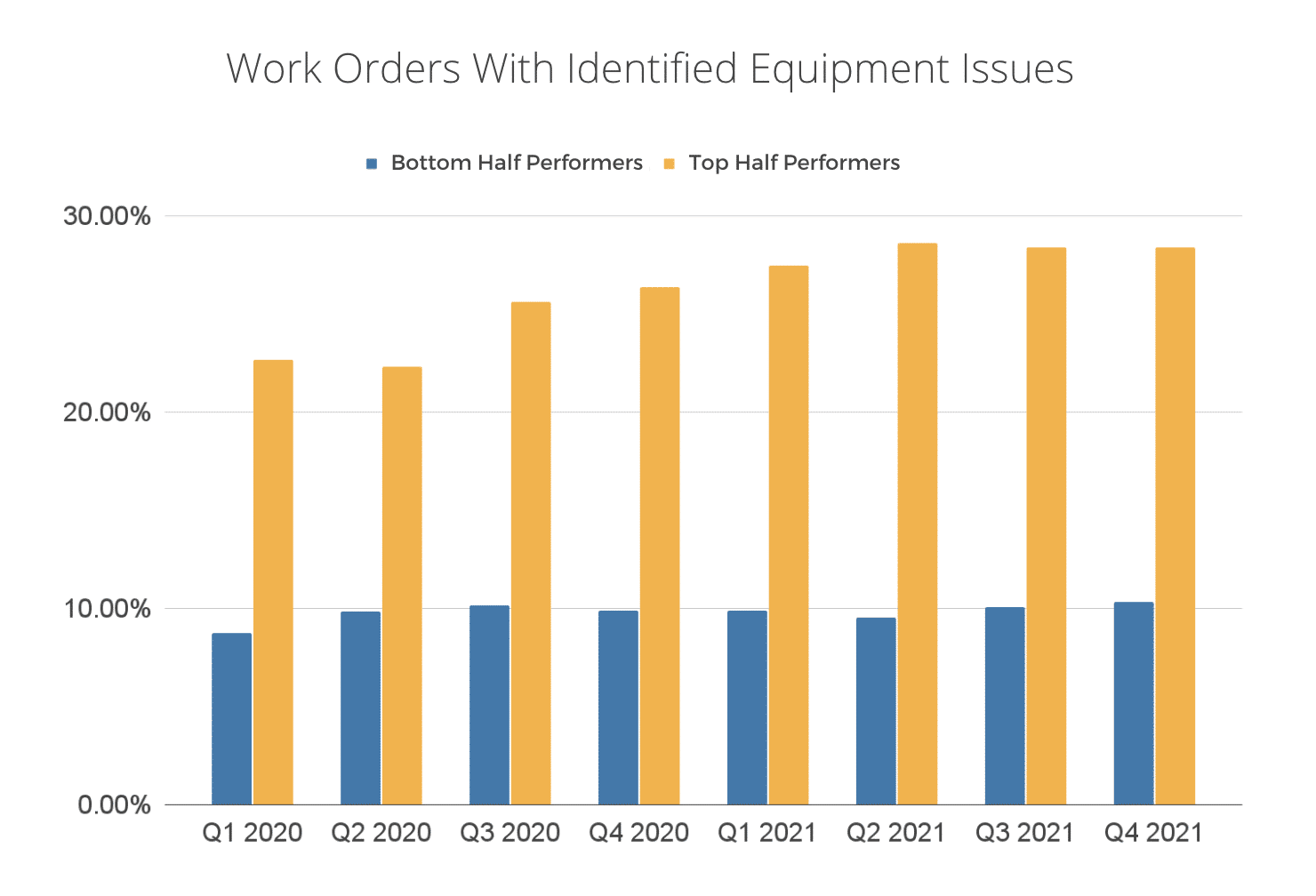
The data also showed that top performers were much more effective at converting identified issues into quotes. Top performers consistently converted between 50% and 60% of identified equipment issues into quotes for their customers. Bottom-half performers only quoted identified issues about 10% of the time.

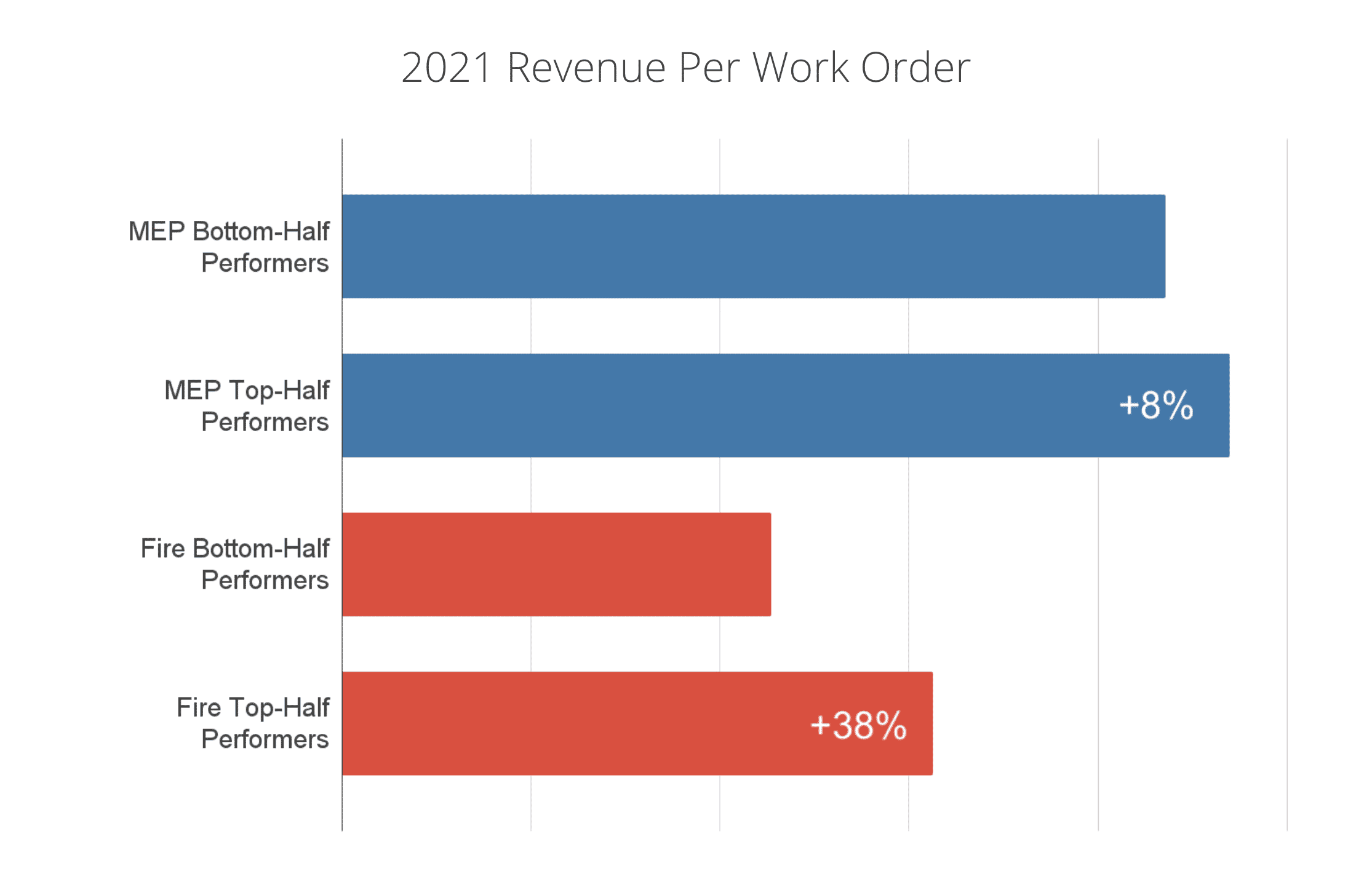
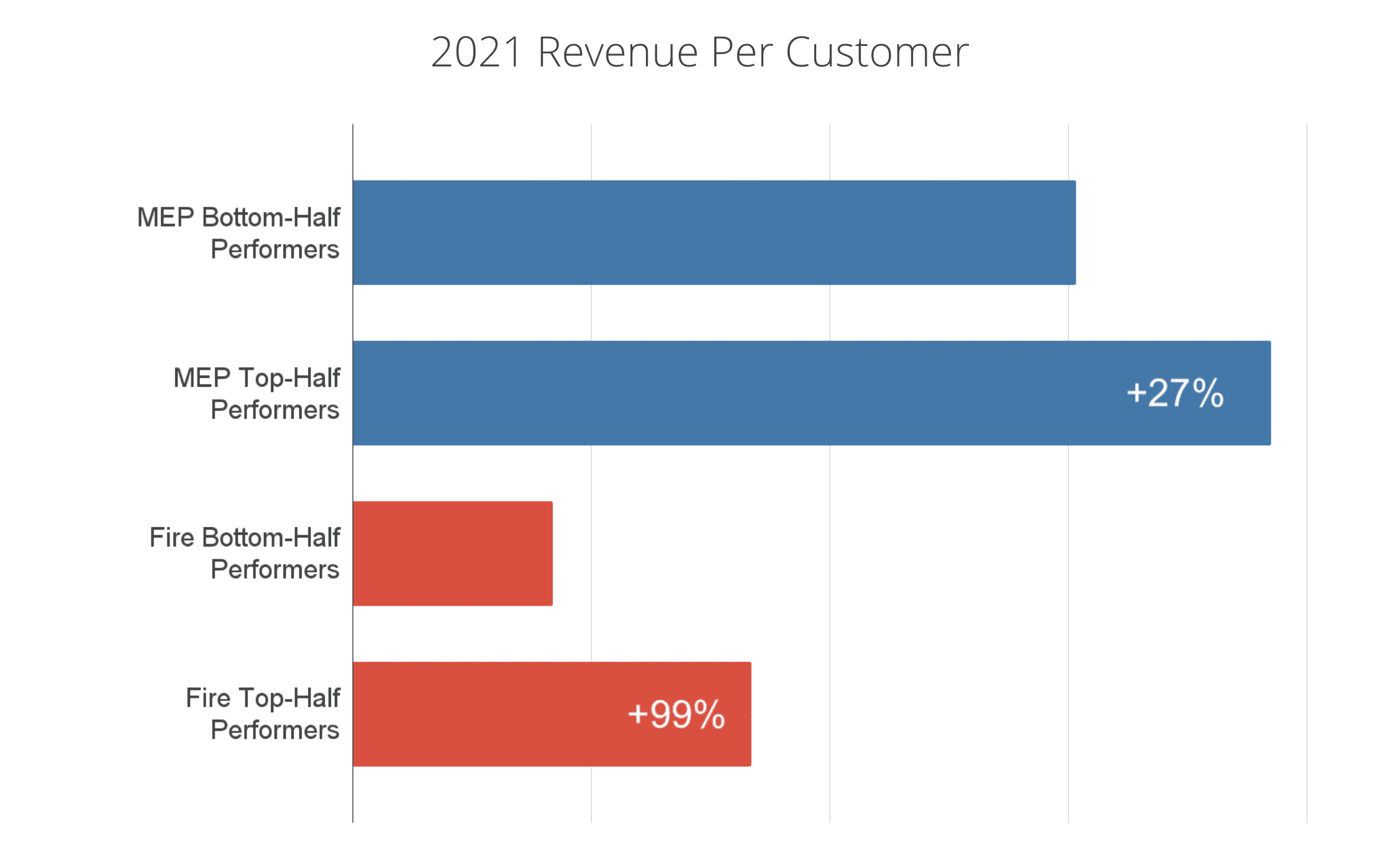
Top pull-through performers earned substantially more revenue per work order and revenue per customer.
In 2020-2021, among the mechanical, electric, and plumbing (MEP) industry segment, top pull-through efficiency performers earned an average of 8% more per work order than bottom-half pull-through efficiency performers. In the fire protection segment, top-half performers earned 38% more per work order than bottom-half performers.
Differences in revenue per customer were even starker. Top MEP pull-through efficiency performers earned an average of 27% more per customer than bottom-half pull-through efficiency performers. In the fire protection segment, top-half performers earned 99% more per customer than bottom-half performers—that’s double the revenue per customer.
Check out our full data report for more revenue trends.
—
ServiceTrade was built with pull-through efficiency in mind, and top performing service contractors are leveraging the app’s streamlined workflow to grow repair revenue. With the right workflows, tools, and buy-in from the full team, improving pull-through efficiency is simple.
Book a demo to find out how ServiceTrade can help your business.
