









Most contractor data isn't too messy for AI scheduling, it just needs sorting instead of a full overhaul. Stella is built to sort through outdated notes, inconsistent formatting, and legacy service lines while flagging the handful of real blockers, like unresolved site addresses or inactive technicians, that actually need fixing. Data quality keeps improving with every scheduling cycle as Stella's recommendations get sharper.
Every field service operations leader at some time has asked some version of the same question: Is my data even usable?
Whether the messiness comes from tracking down information from ten years of scheduling notes, or seeing technicians that are still marked active who quit two years ago, or comments jammed into whatever field was open at the time.
It’s a fair question.
Here’s the surprising part. Messy data isn’t the disqualifier most contractors assume it is. What matters is which kind of messy you’re dealing with, and that distinction changes the whole conversation.
Why “clean data” became the excuse
Ask around and you’ll hear the same worry from owners, GMs, and service managers: “We don’t have clean enough data for this.” It usually comes from a real place. Scheduling data gets messy because teams have spent years working around gaps by hand.
- A dispatcher writes “free every other Sunday” in a comment field with no start date
- A tech’s certification lapses and nobody updates the record
- A customer site gets entered with a typo in the address and stays that way for three years because the job still got done
None of that is a data problem in the way people think. It’s an artifact of running a business where the work happens faster than the paperwork. The mistake is treating that data messiness as permanent disqualification instead of something to sort through.
The distinction between data that is messy but workable and data which is messy in a way that actually blocks scheduling is worth making explicit, because they call for different responses.
The difference between noise and a real blocker
Some data gaps genuinely stop an AI scheduling system cold:
- A customer site with no valid address can’t be geocoded, so Stella can’t route a job there
- A technician who isn’t marked active in the system is invisible to scheduling, no matter how good they are in the field
- Service lines that aren’t defined consistently mean the system can’t match the right tech to the right job by skill
Those can be real blockers, and they’re worth fixing before go-live.
Most of what people call “messy data” isn’t that. It’s noise: outdated PTO notes, half-finished comments, inconsistent formatting, legacy service lines nobody’s cleaned up.
Noise degrades quality at the margins. It doesn’t stop the system from working, and it’s exactly the kind of thing an AI agent is built to sort through.
The pattern shows up clearly in how ServiceTrade handles years of scheduling comments buried in scheduling records and job history
- A pre-processing agent pulls every relevant note into one place
- A comprehension layer sorts each note into relevant, irrelevant, or unclear, turning a 10,000-row export of scattered dispatcher notes into a few hundred real scheduling facts
- A dispatcher reviews those facts in a table and confirms or dismisses them
- The system routes each confirmed fact to the right tech, site, or appointment
Nobody reads 10,000 rows of comments to get there.
What Stella AI agents need to move scheduling forward
Getting value from Stella doesn’t require a clean database.
It only requires three things:
- The software turned on for the right users
- Site addresses that resolve to a real location
- Active technicians tagged with the service lines that match their work
That’s it for the hard requirements. Everything else, from working hours to job substatus habits, affects how sharp the recommendations are, not whether the system runs at all.
Aged accounts, the ones with a few years of history, tend to carry the most noise: stale addresses, technicians still assigned to work they no longer do, service lines nobody’s touched since 2023. That’s expected. It’s also fixable in a focused cleanup pass rather than a full data overhaul, and Stella flags exactly where those gaps live instead of failing silently on them.
Stella’s guardrails work the same way day to day. Before a schedule gets built, the system surfaces missing certifications, conflicting assignments, and incomplete records so a dispatcher can catch them before they turn into a callback or a missed SLA.
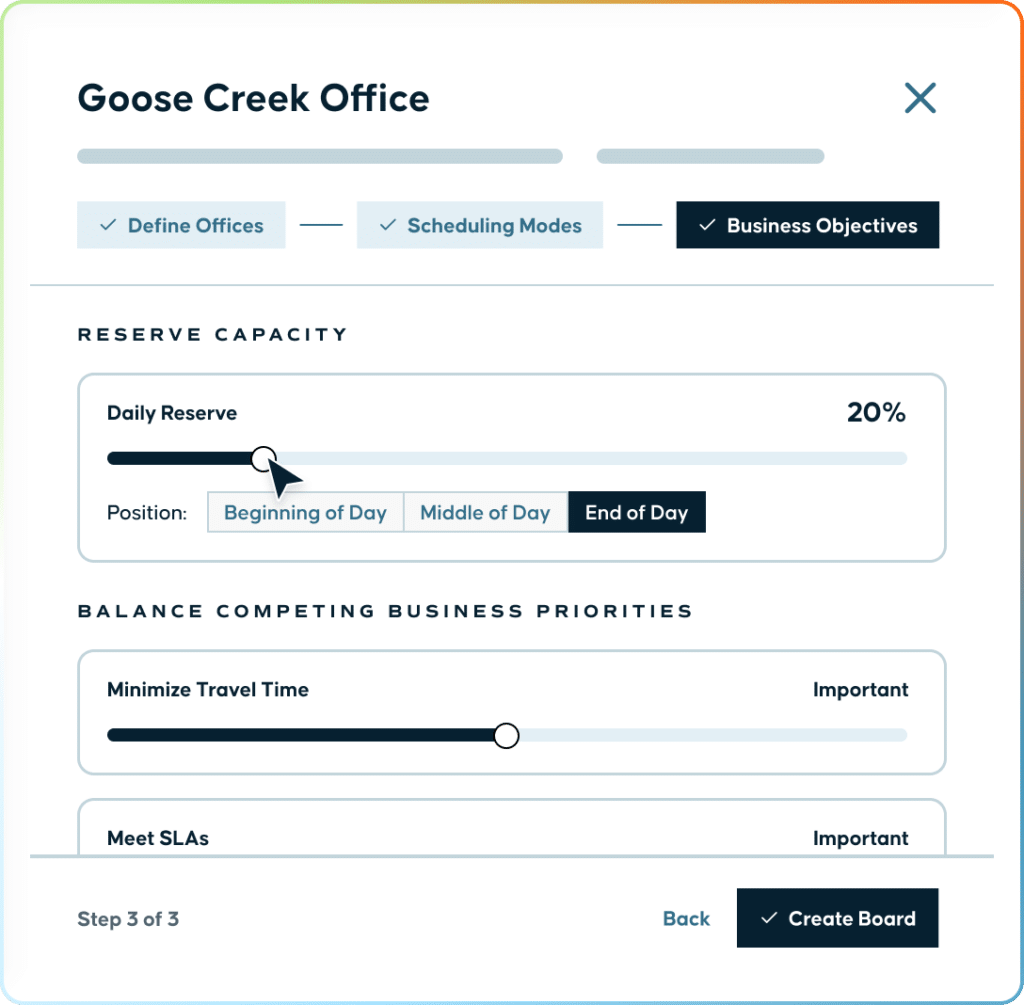
One early access user, a data and operations analyst, called out the drive time view specifically for flagging gaps between jobs that used to slip through unnoticed. That’s the mechanism working as intended: catch the problem before it reaches the field, not after.
Every schedule makes the next one better
The other piece people miss: data quality isn’t a one-time test you pass or fail. Every scheduling cycle through Stella Schedule surfaces a few more gaps, and fixing them compounds.
Stella’s recommendations are built on Trade Intelligence, ServiceTrade’s data layer drawn from 14+ years of commercial service history, 17 million service and deficiency events, and 48 million tracked assets.
That foundation means the system isn’t guessing at what “good scheduling” looks like in the abstract. It’s applying patterns from real commercial service work, and it gets sharper as your own account’s data gets cleaner alongside it.
So if the question is whether your data is too messy to start, the honest answer is: probably not. If it’s whether your data is perfect, also probably not, and that was never the bar.
Curious what Stella Schedule would flag for your team?
FAQs
Is my data too messy for AI scheduling?
No, most contractor data isn’t too messy for AI scheduling. It just needs sorting, not a full cleanup. Stella is built to sort through outdated notes, inconsistent formatting, and legacy service lines instead of choking on them. What actually matters is whether real blockers exist, like unresolved site addresses or inactive technician records.
What’s the difference between messy data and a real blocker for AI scheduling?
A real blocker stops Stella from working at all. Messy data, or noise, just adds friction it’s built to sort through. Site addresses that can’t be geocoded, inactive technician records, and inconsistently defined service lines count as real blockers. Outdated PTO notes, inconsistent formatting, and old comments are noise, they slow results without stopping the schedule.
What does Stella actually need to work?
Stella needs three things: the software turned on for the right users, site addresses that resolve to a real location, and active technicians tagged with the service lines that match their work. Everything else, like working hours or job substatus habits, affects how sharp the recommendations are, not whether the system runs.
Does old or aged account data cause problems for Stella?
Aged accounts with years of history often carry the most noise, like stale addresses and technicians still tagged to work they no longer do. That’s expected, and it’s fixable with a focused cleanup rather than a full data overhaul. Stella flags exactly where the gaps are instead of failing silently on them.
How does Stella handle years of scattered scheduling comments?
Stella runs scattered scheduling notes through a pre-processing agent that pulls every relevant comment into one place, then a comprehension layer sorts each note into relevant, irrelevant, or unclear. That process can turn a 10,000-row export of dispatcher notes into a few hundred real scheduling facts a dispatcher can quickly confirm or dismiss.
Does data quality improve over time with Stella?
Yes, every scheduling cycle surfaces a few more gaps, and fixing them compounds over time. Stella’s recommendations are built on Trade Intelligence, ServiceTrade’s data layer drawn from over 14 years of commercial service history, 17 million service and deficiency events, and 48 million tracked assets. The system gets sharper as an account’s own data gets cleaner alongside it.
